What are the limitations of a truck mounted telescopic boom crane in terms of load shape?
As a supplier of truck mounted telescopic boom cranes, I've witnessed firsthand the diverse applications and challenges these powerful machines face. One critical aspect that often goes under - the - radar is the impact of load shape on the crane's performance. In this blog, I'll delve into the limitations of truck mounted telescopic boom cranes when it comes to different load shapes.
Irregularly Shaped Loads
Irregularly shaped loads can pose significant problems for truck mounted telescopic boom cranes. Unlike symmetric and uniformly shaped loads, irregular loads have uneven weight distribution. This unevenness can lead to instability during the lifting process. For example, a load with a long, protruding end can create a moment that the crane may not be designed to handle. The center of gravity of an irregular load is difficult to determine accurately, and if miscalculated, it can cause the crane to tip over.
The telescopic boom of a crane is designed to handle loads in a relatively straightforward manner, with the load's center of gravity aligned as closely as possible to the boom's vertical axis. When an irregularly shaped load is introduced, this alignment becomes challenging. The load may shift during lifting, causing the crane to experience unexpected forces. These forces can put excessive stress on the boom structure, potentially leading to structural damage over time.
Long and Thin Loads
Long and thin loads, such as pipes or beams, present their own set of limitations. The main issue with these loads is their susceptibility to bending. When a long and thin load is lifted by a truck mounted telescopic boom crane, the load can sag under its own weight. This sagging not only affects the stability of the load but also the crane itself.
The crane's boom is designed to lift loads vertically, but the bending of a long and thin load can introduce horizontal forces. These horizontal forces can cause the boom to deflect sideways, reducing its lifting capacity. Additionally, the bending of the load can make it difficult to control the load's orientation during lifting, which may be crucial in some applications, such as constructing a building framework.
Large and Bulky Loads
Large and bulky loads, like shipping containers or large machinery, can be a challenge for truck mounted telescopic boom cranes due to their size and weight. These loads often require a large amount of space for lifting and maneuvering. The reach of a telescopic boom may be limited, and if the load extends beyond the crane's maximum reach, it becomes impossible to lift safely.
Moreover, the wind resistance of large and bulky loads is a significant concern. Even a moderate wind can exert a considerable force on these loads, causing them to sway and creating instability. The crane may need to operate at reduced capacity to account for the additional forces generated by the wind. In some cases, unfavorable weather conditions may even prevent the use of the crane altogether when dealing with large and bulky loads.
Loads with Unstable Surfaces
Loads with unstable surfaces, such as piles of loose materials or objects with uneven bases, are difficult to handle for truck mounted telescopic boom cranes. The lack of a stable surface makes it challenging to attach the lifting equipment securely. For example, a pile of gravel may shift during the lifting process, changing the load's center of gravity and potentially causing it to fall.
The instability of the load can also make it difficult to control the crane's movements. Operators need to be extra cautious when lifting such loads to prevent accidents. In addition, the impact of the load on the ground during loading and unloading may be unpredictable, especially if the surface is soft or uneven.
Solutions and Mitigations
Despite these limitations, there are several measures that can be taken to address the challenges associated with different load shapes. For irregularly shaped loads, engineers can use computer - aided design (CAD) software to analyze the load's center of gravity and develop appropriate lifting plans. Specialized rigging equipment can also be used to ensure the load is balanced and secure during lifting.
When dealing with long and thin loads, additional support structures can be employed. For example, intermediate lifting points or a guy - wire system can be used to reduce the sagging of the load and minimize the horizontal forces acting on the crane's boom.
For large and bulky loads, proper planning is essential. This includes assessing the site conditions, wind forecasts, and the crane's reach and capacity. Cranes with larger lifting capacities and longer booms can be selected if necessary. In some cases, the load may need to be disassembled into smaller, more manageable parts for easier lifting.
For loads with unstable surfaces, non - slip pads or custom - designed load - handling fixtures can be used to improve the stability of the load during lifting.
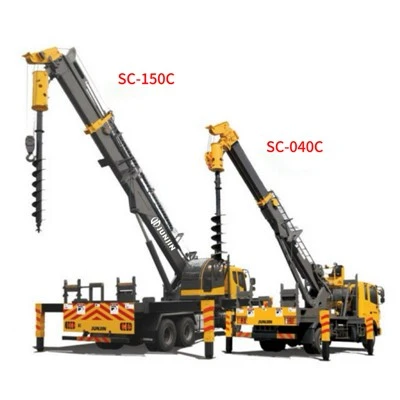
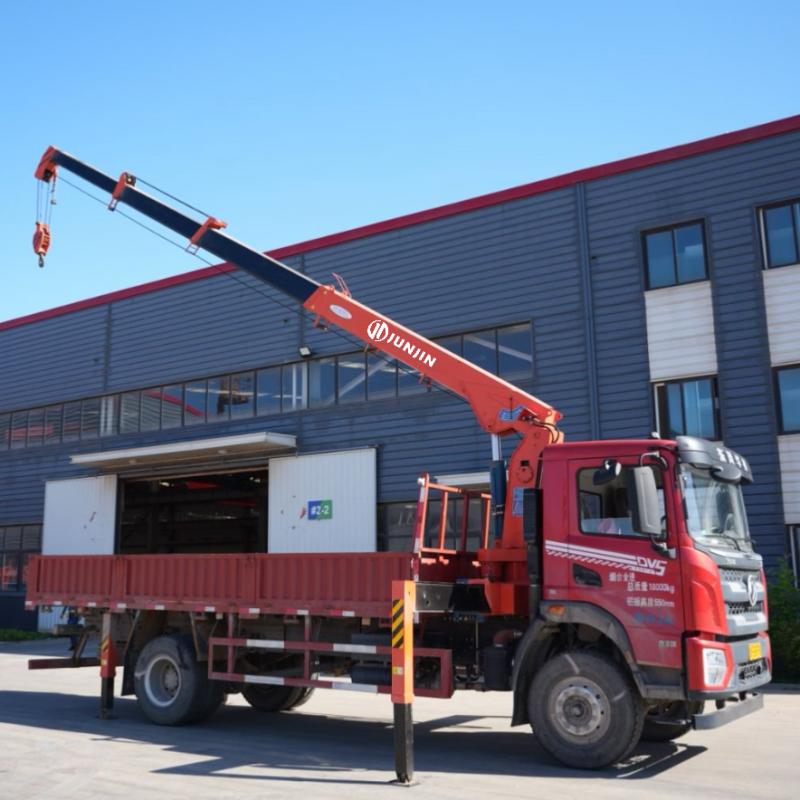
At our company, we offer a range of Telescopic Truck Mounted Crane solutions that can be customized to handle different load shapes. We also provide comprehensive training for crane operators to ensure they are well - equipped to deal with the challenges presented by various load shapes. Additionally, we have a team of experienced engineers who can assist in developing safe and efficient lifting plans for your specific needs.
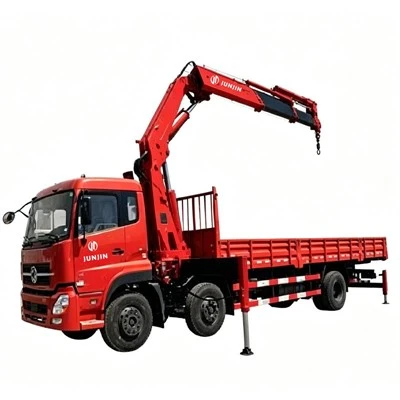
We also have Folding Boom Truck Crane options available. These cranes can have unique advantages in certain scenarios when dealing with different load shapes, such as easier storage and better maneuverability in tight spaces.
If you're in the market for a truck mounted telescopic boom crane or need assistance with handling challenging load shapes, don't hesitate to reach out. Our team of experts is ready to discuss your requirements and provide you with the best solutions. We can work with you to ensure that your lifting operations are safe, efficient, and successful.

References
- "Crane Handbook: An Engineering Guide" by Frank M. Driscoll.
- "Lifting Equipment: A Comprehensive Guide to Safe Use" by the Health and Safety Executive.