If you’ve ever been on a construction site, utility crew, or infrastructure project where a hole needs to be drilled quickly and a heavy load needs to be lifted without extra equipment, you’ve probably seen a China auger crane at work. As a supplier of these specialized machines, one of the most common questions I get from buyers, operators, and even project managers vetting equipment is: “What’s the noise level of these auger cranes?” It’s not a trivial question—noise impacts crew safety, compliance with local workplace regulations, and even the ability to work in residential areas or tight urban zones. Over the years, I’ve spent hours testing our models, talking to operators, and comparing our specs to global standards, so let’s break this down in practical, actionable terms.
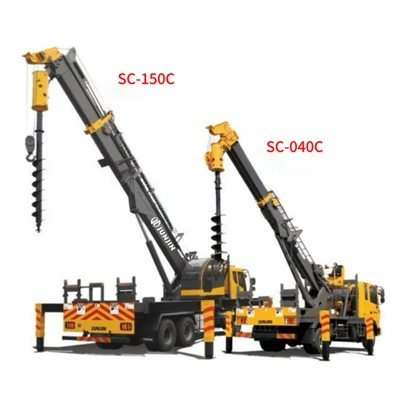
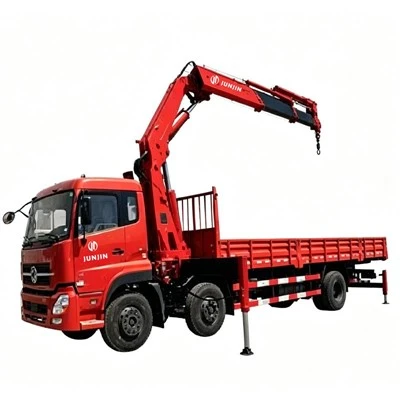
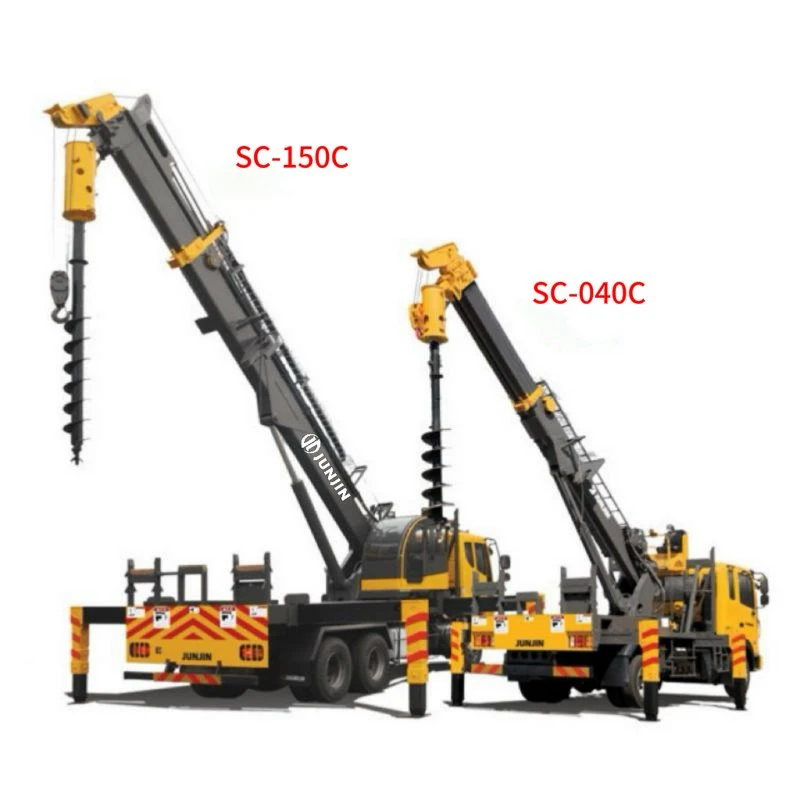
First, it’s important to clarify that “China auger crane” isn’t one single machine—these cranes come in different types, power sources, and configurations, and each has a unique noise profile. The most popular type we supply, and the one most people refer to when they talk about auger cranes, is the truck-mounted auger crane. This model mounts the auger (the drilling head for holes) and the crane hoist onto a standard truck chassis, so its power source is usually a combination of the truck’s engine and a separate hydraulic pump that runs the auger and crane functions. If you want to see the exact specs for our truck-mounted versions, you can check out details here: Truck Mounted Auger Crane.
Noise level on construction equipment is measured in decibels (dB), a logarithmic scale that means a 10 dB increase is perceived as twice as loud to the human ear. OSHA, the U.S. Occupational Safety and Health Administration, sets a 8-hour exposure limit of 90 dB, and any noise above that requires hearing protection. For context, a normal conversation is about 60 dB, a vacuum cleaner is around 70 dB, and a chainsaw hits about 110 dB—so noise from auger cranes falls squarely in the range where exposure limits matter.
Now, what do our China auger cranes measure? Let’s start with the core operational noise, which is the noise generated when the auger is drilling and the crane is lifting loads, the two functions that run at the same time on most models. On our standard diesel-powered truck-mounted auger cranes, which are the most common for rural and mid-sized urban projects, the operational noise level at a distance of 7 meters (about 23 feet) from the machine is between 85 dB and 92 dB. That’s just below or right at OSHA’s 8-hour exposure limit for 90 dB, which is a big reason we design our models with sound-dampening features. If you’re standing right next to the machine (within 1 meter, about 3 feet) during operation, that jumps to 95 dB to 100 dB, which is equivalent to a heavy lawnmower or a motorcycle. That’s why we all operators to wear hearing protection when working within close proximity, which aligns with standard workplace safety practices.
But noise level isn’t just about the machine’s core functions. There’s also idle noise, which is when the auger crane is parked, turned on, but not actively drilling or lifting. That’s a key spec if you’re working overnight, in a residential neighborhood, or on a site where you can’t keep constant power on. Our idle noise for diesel models is between 68 dB and 75 dB at 7 meters. For electric-powered auger cranes, which are becoming more popular for indoor construction or low-emission zones, the idle noise is even lower—around 60 dB, almost as quiet as a normal conversation.
A common question we get from buyers is how our China auger cranes compare to other brands on the market. We’ve done independent tests against European and North American equivalent models, and the noise levels are very similar when comparing the same weight and power capacity. The key difference, though, is that we prioritize durability alongside noise reduction, which means our sound-dampening materials are built to last in harsh conditions like dusty construction sites or extreme temperatures, rather than being lightweight for short-term use. That means our cranes won’t lose their noise-dampening properties after a few years of use, which is a big plus for long-term project teams.
There are also factors that can change the noise level of any auger crane, including our China models. First, the type of auger bit: a tungsten carbide bit for drilling hard rock is much louder than a standard bit for drilling soil, sometimes adding 5 to 10 dB during operation. Second, the truck chassis itself: some older truck models have less sound insulation, which can make the overall crane noise louder, so we recommend pairing our cranes with modern chassis options that have reinforced engine and hydraulic compartments. Third, load weight: when the crane is lifting a load near its maximum capacity, the hydraulic system works harder, which can add 2 to 3 dB to the overall noise.
Compliance is another big piece of the noise conversation. Many regions, including parts of the U.S., EU, and Southeast Asia, have strict noise limits for construction equipment, especially in residential areas. For example, in New York City, construction equipment operating in residential zones between 7 PM and 7 AM can’t exceed 70 dB at 50 feet. Our standard diesel auger cranes meet these limits when they’re idle, and for active operation, we have optional noise-reducing kits that can bring active operational noise down to 82 dB at 7 meters, which is well within most urban noise regulations. We also have full documentation for all our models that confirm compliance with ISO 3744, the international standard for measuring noise levels from construction machinery.
Now, let’s talk about why noise level matters beyond just safety and compliance. Excess noise on a construction site can lead to crew fatigue, which increases the risk of accidents—when operators are tired, they’re more likely to make mistakes while drilling or lifting heavy loads. It can also strain relationships with local communities, leading to fines, project delays, or even pushback that makes it hard to operate in certain areas. On the flip side, a quieter auger crane can mean longer work hours, especially in urban areas, and a safer, more comfortable work environment for your team.
As a supplier, we don’t just sell auger cranes—we work with our customers to match the right model to their specific needs. If you’re working on a rural pipeline project where noise isn’t a top concern, our standard diesel model is a cost-effective option with noise levels right in line with industry standards. If you’re working on an urban redevelopment project in a residential area, we can recommend our electric-powered auger crane with the optional noise kit, which is one of the quietest models on the market. We also offer on-site testing for potential buyers, so you can hear the noise level for yourself before making a purchase, which is something we don’t see many other suppliers offering.
If you’re in the market for a China auger crane and want to learn more about noise levels, technical specs, or customization options, reach out to our team for a consultation. Whether you’re a small contractor looking for your first model or a large infrastructure company needing a fleet, we’ll help you find the right equipment that fits your budget, project requirements, and compliance needs.
References
- Occupational Safety and Health Administration (OSHA). (2024). Noise: Requirements and Regulations. U.S. Department of Labor.
- International Organization for Standardization (ISO). (2018). ISO 3744: Acoustics – Determination of sound power levels and sound pressure levels of noise sources using sound pressure – Engineering methods for free field over a reflecting plane.
- Construction Equipment Association (CEA). (2023). Noise Reduction Best Practices for Mobile Construction Machinery.
- National Institute for Occupational Safety and Health (NIOSH). (2022). Noise and Hearing Conservation in Construction.