When I first started working with hydraulic top hammer drill rigs over a decade ago, I’ll admit I didn’t pay as much attention to the mast as I should have. I was focused on the engine, the hammer itself, the way the hydraulics flowed when we were boring through granite at a construction site in northern Minnesota. It wasn’t until a client called us out because their mast had twisted mid-drill, derailing the entire operation that I realized just how central this component really is. Now, as a supplier of heavy drilling equipment, I spend a lot of time talking to drill operators, site managers, and engineers about the mast—and why it’s not just a metal pole holding up the drill.
The hydraulic top hammer drill rig is a workhorse across so many industries: mining, quarrying, construction, geothermal drilling, even excavation for utilities. Every part works in tandem, but the mast is the backbone that makes it all function as intended. Let’s break down exactly what role this piece plays, because if you’re in the market for drilling equipment, understanding the mast could be the difference between a project that runs smoothly and one that’s delayed for weeks.
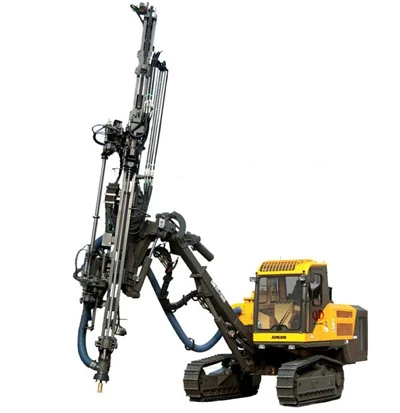
First, let’s define what the mast actually is. It’s a vertical (or sometimes angled) heavy-duty metal structure, usually made of high-tensile steel, mounted to the main frame of the drill rig. What surprises most people is how much engineering goes into its design—especially for a top hammer setup, where the hammer itself delivers rapid, high-impact blows to the drill bit. Unlike down-the-hole drills, where the hammer is inside the bit, top hammer drills mount the hammer at the top of the drill string, so all the force is transferred down through the rods. That means the mast has to support not just the weight of the hammer and rods, but also absorb that constant, jarring impact.
One of the primary roles of the mast is guiding the drill string with precision. If the mast isn’t aligned perfectly, the drill bit will wander, creating holes that are off-center or at the wrong angle. For example, in quarrying, where you need consistent, parallel holes for blasting, even a half-degree misalignment can throw off the entire blast pattern. We’ve seen clients cut their drilling efficiency by 30% because their old mast was bent from years of wear, forcing them to re-drill holes to fix the angle. Modern masts for hydraulic top hammer rigs use linear guides and precision bearing systems to keep the drill string on track, even under heavy load. That’s why when we talk about our integrated models, like the Top Hammer Hydraulic Integrated Drilling Rig, we emphasize that our masts are designed with linear roller bearings that reduce friction and maintain alignment, even in the toughest terrain.
Next, the mast acts as a support structure for two critical hydraulic functions: feed and retraction. The feed system is what pushes the drill string downward as the hammer operates, maintaining the correct pressure on the bit to deliver consistent penetration. If the mast can’t support that feed force, the hammer won’t make full contact with the rock—leading to slower drilling, excessive bit wear, or even the hammer stalling. The hydraulic cylinders attached to the mast are responsible for this feed, and the mast has to be rigid enough to handle those forces without flexing. Retraction is equally important: when you finish a hole, you need to pull the drill string back out, and the mast has to support the weight of the multiple steel rods (which can add up to thousands of pounds) as you lift them. I remember a job in West Virginia where a contractor used a rig with a thin, underbuilt mast; when they tried to retract 12 rods from a 30-foot hole, the mast bent so badly they had to cut the rods out with a torch, costing them tens of thousands in downtime. That’s the kind of story that sticks with you.
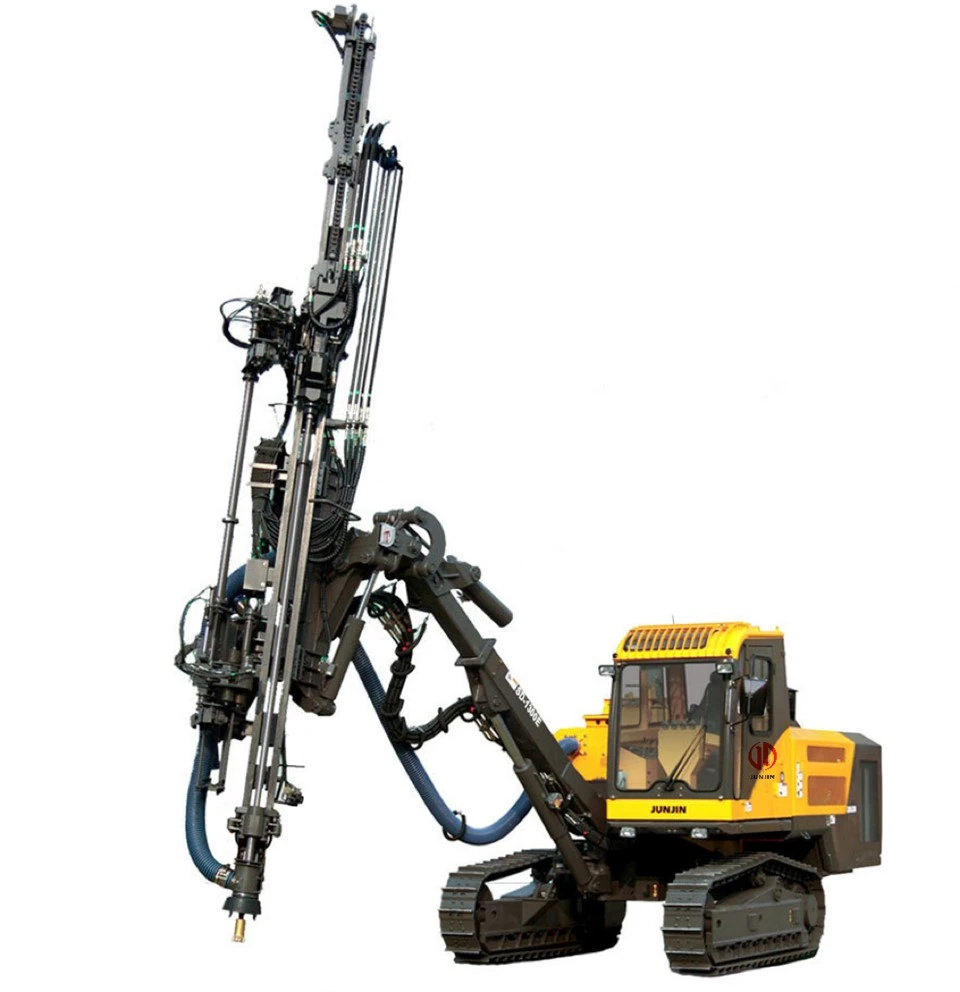

Absorbing vibration and impact is another key role of the mast. Top hammer drills deliver 1,500 to 3,000 blows per minute, depending on the model. All that energy is transferred through the drill string, and if the mast isn’t designed to dampen that vibration, it will cause wear and tear on every other part of the rig—from the hydraulic hoses to the operator’s controls (and even the operator, through hand-arm vibration syndrome). Our masts incorporate vibration-dampening systems, like rubber isolators and tuned mass dampers, which reduce not just wear on the rig, but also operator fatigue. When you’re running a 10-hour shift, less vibration means you’re more accurate and less likely to make a mistake. That’s why our line of Hydraulic Integrated Rock Drilling Rigs, including the Top Hammer models, are engineered with these dampening features—we’ve seen a 40% reduction in maintenance costs for clients who switched to our rigs over older models.
Adjustability is a role that’s often overlooked, but it’s one that makes the mast so versatile. Many sites require holes at different angles—for example, in mining, you might drill vertical holes for blastholes, or angled holes for slope stabilization. A mast that can tilt (most modern masts can adjust from 0 to 90 degrees, and sometimes beyond) lets you switch between these applications without moving the entire drill rig. That’s a huge time-saver on busy sites. We recently had a construction client who needed to drill both vertical holes for foundation piers and angled holes for retaining walls. Being able to adjust the mast on their Top Hammer Hydraulic Integrated Drilling Rig meant they could switch tasks in minutes, instead of having to reposition the rig every time—saving them about two hours per day over the course of a two-week project.
Now, let’s talk about what happens when the mast doesn’t do its job. As a supplier, we see it all the time: a mast that’s not aligned leads to poor hole quality, a mast that can’t handle feed force leads to slower penetration, a mast that doesn’t dampen vibration leads to premature part failure. The cost of a bad mast isn’t just the part itself—it’s downtime, lost productivity, and increased maintenance. For a large mining operation, every hour of downtime can cost tens of thousands of dollars, so investing in a high-quality mast is non-negotiable.
That’s why when we design our hydraulic top hammer drill rigs, we don’t cut corners on the mast. We use high-tensile steel that’s heat-treated for durability, precision linear guides to maintain alignment, and hydraulic systems that are matched to the mast’s capacity. We also include features like remote mast positioning, which lets operators adjust the angle from the cab, improving safety and accuracy. For clients who need different drilling applications, we offer models like the Hydraulic Integrated Rock Drilling Rig, which can be configured with different mast lengths depending on the depth of holes they need to drill. Whether you’re drilling shallow holes for utility lines or deep holes for mining, the mast can be tailored to your needs.
I’ve worked with enough clients to know that when people shop for drill rigs, they often focus on the hammer power or the engine horsepower first. But the mast is the unsung hero that makes all those other parts work together. A 5,000-foot-pound hammer is useless if the mast can’t guide the drill string so all that force is concentrated on the right spot. A feed system with 10,000 pounds of force is wasted if the mast flexes and reduces that effective force at the bit. The mast is the interface between the rig’s power and the rock, and getting that interface right is what makes a drill rig effective.
If you’re in the market for a hydraulic top hammer drill rig, don’t overlook the mast. Ask about its construction: what material is it made of? Does it have linear guides or just sliding surfaces? What’s its load capacity for feed, retraction, and impact? Does it have vibration-dampening features? These are the questions that will help you determine if a rig is going to deliver on its promise. For example, our Top Hammer Hydraulic Integrated Drilling Rig has a mast with a 20,000-pound feed force capacity, precision roller bearings, and vibration dampening that’s been tested in some of the harshest environments in North and South America. We’ve had clients use these rigs in the Andes Mountains, drilling through hard granite at 12,000 feet, and they’ve reported no mast-related issues even after years of heavy use.
At the end of the day, the role of the mast in a hydraulic top hammer drill rig is about three things: guidance, support, and durability. It’s what keeps the drill string on the right path, what handles the forces that the hammer and feed system generate, and what stands up to the constant punishment of drilling through rock. If you’re a site manager or operator, treating the mast with care—regularly inspecting alignment, lubricating the guides, and checking for wear—will extend the life of your entire rig. And if you’re in the market for a new rig, make sure the mast is a priority, not an afterthought.
If you’re looking for a reliable hydraulic top hammer drill rig with a mast engineered for performance and longevity, we’re here to help. Our range includes the Hydraulic Integrated Rock Drilling Rig, Top Hammer Hydraulic Integrated Drilling Rig, and Down-the-Hole Hydraulic Integrated Drilling Rig, each designed to meet the needs of different drilling applications. We work with clients across all industries to find the right rig for their site, and we provide support to keep their equipment running smoothly for years to come. Reach out to our team to discuss your drilling needs and find the perfect solution for your project.
References:
- Mining Safety and Health Administration. (2020). "Drill Rig Safety: Mast Integrity and Alignment." Retrieved from official MSHA technical guidelines on surface mining equipment.
- Sandvik Mining and Rock Technology. (2021). "Hydraulic Top Hammer Drilling: Mast Design and Performance Optimization." Technical Paper No. SMT-TP-2021-04.
- International Society of Explosives Engineers. (2019). "Blast Hole Quality: The Impact of Drill Rig Mast Alignment on Blasting Efficiency." Journal of Explosives Engineering, Vol. 36, No. 3.
- Atlas Copco Construction and Mining. (2022). "Vibration Dampening in Drill Rigs: Design Principles and Field Testing." Customer Success Report for Hard Rock Drilling Operations.